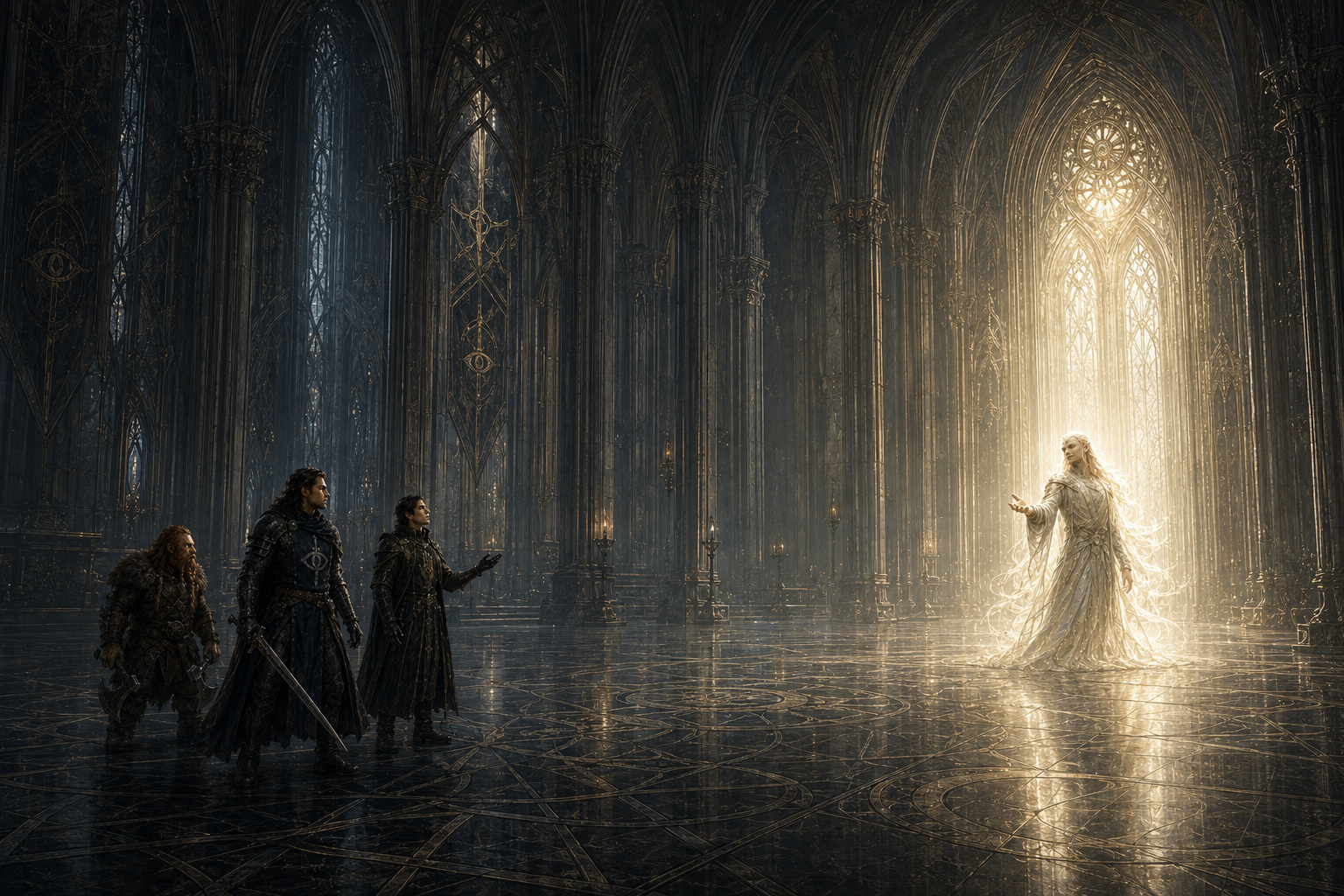

A world exists between its major events
Kings, wars, and ancient catastrophes provide a setting with history. They do not, on their own, make it feel inhabited. The more revealing question is often what an ordinary morning looks like for the people who live there.
Who opens the gates? Who prepares the meal? Which duties are taken seriously, and which are quietly avoided? These details establish what people expect of the world before the story begins to challenge those expectations.
Institutions are made of people
An order of knights can have a shared oath without every member interpreting it in the same way. A religious institution can be united in its beliefs while its members disagree over responsibility, ambition, and the proper use of authority.
Those differences allow a player to encounter the same institution through several perspectives. A mentor, a novice, a scholar, and a soldier have different relationships with its rules, even when they serve under the same banner.
Let the setting appear in play
A training exercise can reveal rank and personality. A request for a mundane errand can expose a shortage, a rivalry, or an uncomfortable obligation. An object can suggest how a place is used without requiring a paragraph of explanation.
In Dark Omen, the Vigilant Guard provides a setting for shared rituals, formal responsibilities, and personal relationships alongside the order’s larger purpose. The surrounding world becomes more convincing when those smaller elements have room to breathe.
Leave room for the player
Not every implication needs an immediate explanation. Players enjoy making connections between what they see, what they hear, and what a character chooses not to say. A setting becomes memorable when its details invite attention, while its people remain complicated enough to resist a single explanation.